Synopsis
For many “Weekend Warriors,” the transition from a sedentary work week to high-impact sports like football, tennis, or running is a recipe for knee disaster. This guide explores the concept of dynamic stabilization—the body’s ability to maintain joint integrity during rapid movement. We detail how specialized physiotherapy at Orthocure Clinics and Strength Studios focuses on “proprioceptive” training to prevent common injuries like ACL tears and meniscus damage. By utilizing a Medical Gym environment, patients can move beyond basic leg strength to develop the neuromuscular control required for cutting, pivoting, and jumping. We examine how structural correction of the hip and ankle reduces the mechanical “valgus” stress on the knee. Understanding that a strong muscle is useless if it doesn’t fire at the right time is the first step toward injury-free performance. Consistent training in our Strength Studio ensures that your knees are protected by a smart, reactive muscular system.
Table of Contents
- The Weekend Warrior Risk- Why Occasional Intensity Causes Injury
- Dynamic Stabilization vs. Static Strength- The Brain-Muscle Link
- The ACL and Meniscus- Understanding the Knee’s Internal Security
- Neuromuscular Control- Training Your Body to React in Milliseconds
- Structural Correction- Fixing the Hip-Ankle-Knee Alignment
- The Strength Studio- Developing Eccentric Power for Safe Deceleration
- Specialized Physiotherapy- Plyometrics and Agility in a Clinical Setting
- Partnering with Orthocure for Athletic Longevity
The Weekend Warrior Risk- Why Occasional Intensity Causes Injury
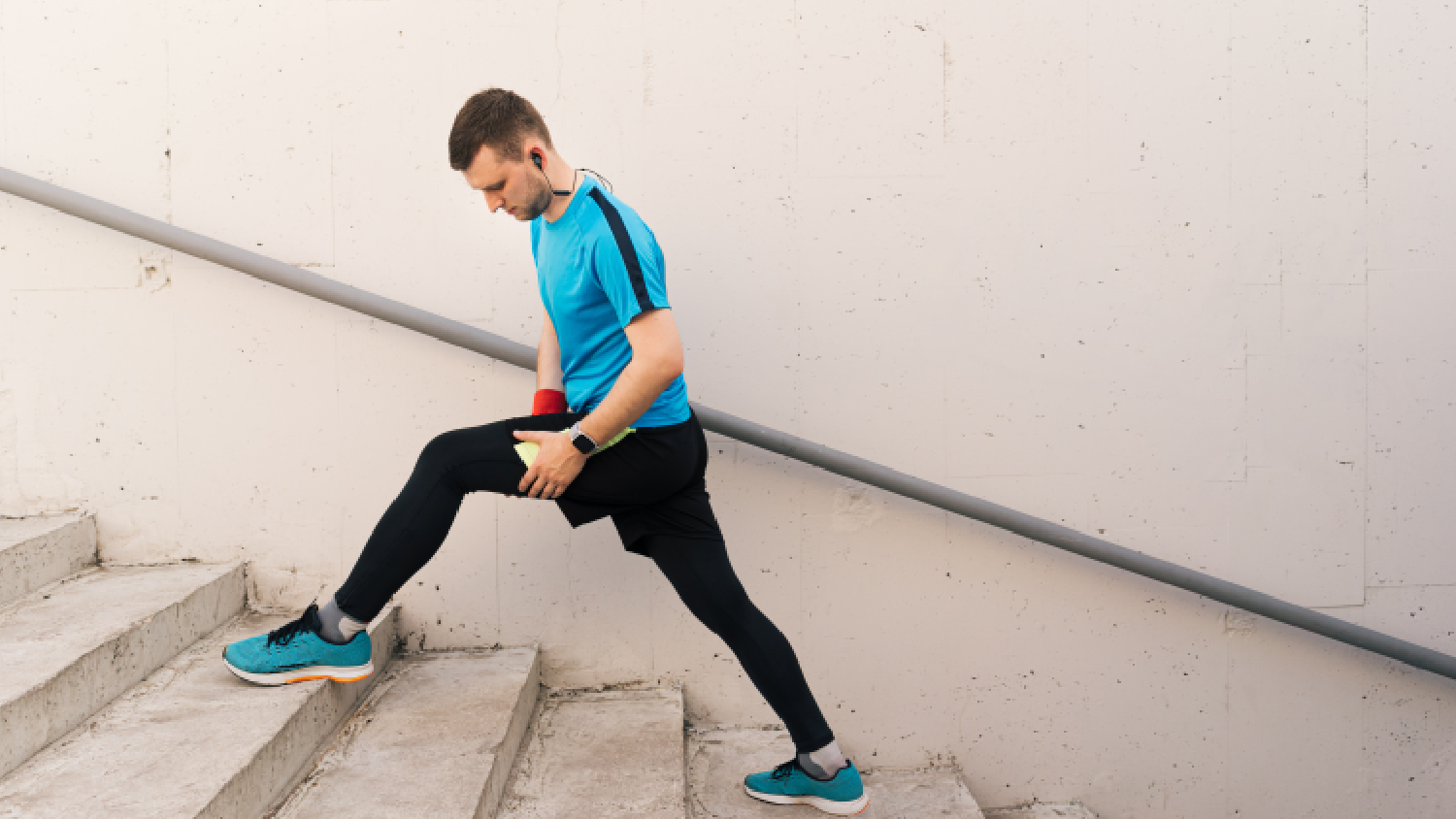
The “Weekend Warrior” phenomenon involves spending five days in a chair followed by two days of high-intensity activity. This creates a “stability gap.” At Orthocure Clinics and Strength Studios, we find that most knee injuries occur not because of a lack of strength, but because the muscles are “asleep” when the joint needs them most. Without consistent specialized physiotherapy to maintain neuromuscular pathways, the knee is left vulnerable to sudden shifts in weight.
Dynamic Stabilization vs. Static Strength- The Brain-Muscle Link
You can have the strongest quadriceps in the world on a gym machine, but if they don’t fire the moment your foot hits uneven turf, your knee will buckle. This is the difference between static strength and dynamic stabilization. Our Medical Gym protocols focus on teaching your muscles to react to gravity and momentum. We bridge the gap between “lifting weight” and “controlling movement.”
The ACL and Meniscus- Understanding the Knee’s Internal Security
The Anterior Cruciate Ligament (ACL) and the Meniscus are the internal stabilizers of the knee. The ACL prevents the shin bone from sliding too far forward, while the meniscus acts as a shock-absorbing wedge. Most tears happen during deceleration or pivoting. Achieving knee pain relief after an injury is difficult, which is why we emphasize a “pre-habilitation” approach in our Strength Studio to ensure these structures never reach their breaking point.
Neuromuscular Control- Training Your Body to React in Milliseconds
Injury prevention is a race against time. An ACL tear happens in less than 60 milliseconds—faster than you can consciously think. Specialized physiotherapy uses balance boards, reactive drills, and single-leg stability exercises to decrease your “reaction time.” By training the nervous system, we ensure that your muscles automatically “brace” the knee joint the moment you change direction.
Structural Correction- Fixing the Hip-Ankle-Knee Alignment
Knee injuries are rarely just about the knee. If your hips are weak or your ankles are stiff, your knee is forced to collapse inward—a dangerous position called “dynamic valgus.” Structural correction at Orthocure involves aligning the entire lower limb. By strengthening the gluteus medius and improving ankle mobility, we remove the “twist” from the knee, allowing it to function as a pure hinge.
The Strength Studio- Developing Eccentric Power for Safe Deceleration
Most injuries happen when you are slowing down or landing. This requires “eccentric” strength—the ability of the muscle to provide force while it is lengthening. In our Strength Studio , we use MedX technology and controlled loading to build this specific type of power. High-quality eccentric strength is the best insurance policy against a meniscus tear during a sudden stop on the tennis court.
Specialized Physiotherapy- Plyometrics and Agility in a Clinical Setting
Our specialized physiotherapy isn’t just about lying on a treatment table. We utilize clinical plyometrics—controlled jumping and landing drills—to ensure your mechanics are perfect. We watch for the subtle “knee wobble” that signals a risk and correct it in real-time. This data-driven approach in a Medical Gym ensures you are ready for the field, the court, or the trail.
Partnering with Orthocure for Athletic Longevity
Don’t wait for a “pop” in your knee to take action. Our services at Orthocure Clinics and Strength Studios are designed to keep you in the game. By combining structural correction with advanced dynamic stabilization, we help you transition from a “Weekend Warrior” to a resilient athlete. Partner with Orthocure today and build a body that can handle the intensity of the life you love.
FAQs
I only play football once a week. Do I really need "neuromuscular" training?
Actually, you need it more than a professional athlete. Because you play infrequently, your body isn’t “tuned” to the high-speed demands of the game. Specialized physiotherapy creates the “muscle memory” needed to protect your ACL during those high-intensity moments.
Can a meniscus tear heal without surgery?
Many small meniscus tears can be managed non-surgically if the surrounding muscles are strong enough to take the load. By using the Strength Studio to build a “muscular brace,” you can often return to sports without pain, avoiding the need for an invasive operation.
Why are the hips so important for knee safety?
The hips control the rotation of the thigh bone. If your hip muscles (glutes) are weak, your knee will “cave in” when you land from a jump. This position puts maximum strain on the ACL. Structural correction of the hip is the first step in protecting the knee.
How does the Strength Studio differ from a regular gym for athletes?
In a regular gym, athletes often focus on how much weight they can move. In our Strength Studio , we focus on how you move that weight. We prioritize the “deceleration” phase and perfect alignment, ensuring your strength actually transfers to your sport safely.
What is the "valgus" position, and why is it dangerous?
“Valgus” is when the knee collapses inward toward the other leg. This “knock-kneed” position is the #1 cause of non-contact ACL tears. Our Medical Gym protocols are specifically designed to eliminate this movement pattern through targeted glute and ankle strengthening.