Synopsis
A diagnosis of scoliosis in adulthood is often met with the fear of invasive spinal fusion surgery or a “wait and see” approach that leaves patients in chronic pain. This guide challenges that narrative by exploring non-surgical strategies for managing adult-onset or adolescent-persistent scoliosis. We detail how structural correction at Orthocure Clinics and Strength Studios focuses on balancing the “asymmetrical” forces that pull the spine out of alignment. By utilizing a Medical Gym approach, patients can develop a “muscular brace” to stabilize the curve and prevent its progression. We examine how specialized physiotherapy uses asymmetrical loading and postural retraining to decompress the side of the spine under the most stress. Understanding that a curved spine can still be a strong, functional spine is the first step toward avoiding surgery. Consistent training in our Strength Studio ensures that the muscular support system remains robust enough to handle the daily demands of life without pain.
Table of Contents
- Adult Scoliosis- Why Curves Can Progress Later in Life
- The Asymmetry Problem- How Muscle Imbalance Drives Pain
- Structural Correction- Managing the Curve Non-Surgically
- Preventing Progression- The Role of the Muscular Brace
- Why General Gym Exercises Can Sometimes Make Scoliosis Worse
- The Strength Studio- Precision Loading for Asymmetrical Spines
- Specialized Physiotherapy- Restoring Mobility to the "Concave" Side
- Partnering with Orthocure for a Balanced and Resilient Spine
Adult Scoliosis- Why Curves Can Progress Later in Life
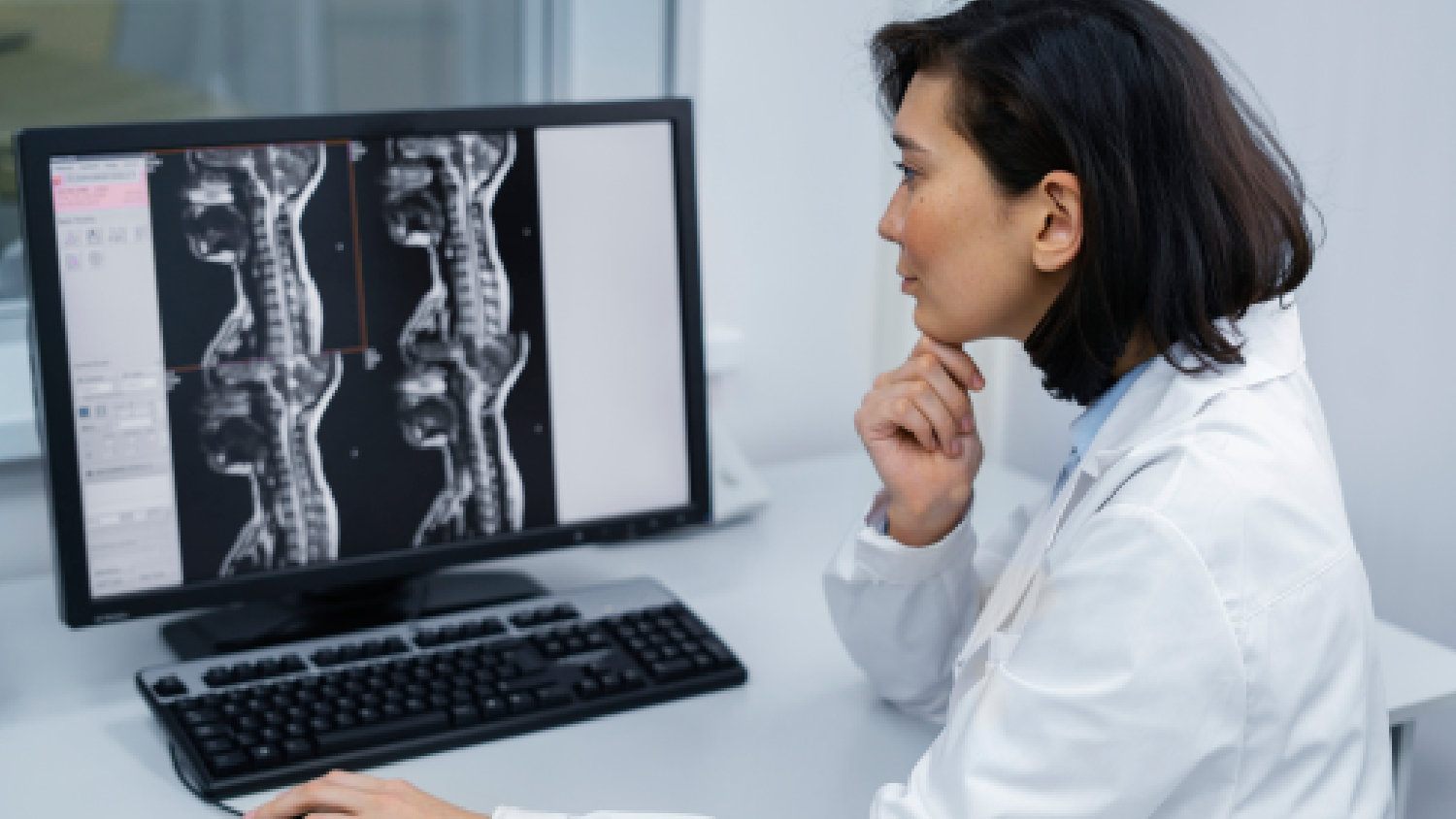
Many adults are surprised to find their scoliosis worsening in their 40s or 50s. At Orthocure Clinics and Strength Studios, we explain that this is often “Degenerative Scoliosis.” As discs wear down unevenly, the spine begins to tilt and rotate further into the curve. Without a proactive strategy, this can lead to severe nerve compression and a visible change in posture.
The Asymmetry Problem- How Muscle Imbalance Drives Pain
In a scoliotic spine, the muscles on the “outside” of the curve are often overstretched and weak, while the muscles on the “inside” are chronically tight and overworked. This creates a tug-of-war that constantly pulls the vertebrae out of place. Achieving back pain relief requires identifying these specific imbalances and using structural correction to restore as much balance as possible to the muscular system.
Structural Correction- Managing the Curve Non-Surgically
While we may not completely “straighten” an adult spine that has structurally fused over time, structural correction focuses on functional alignment. We aim to level the pelvis and shoulders, reducing the “shearing” forces on the discs. By optimizing your posture through our integrated orthopaedic model, we ensure that gravity works for you rather than against you.
Preventing Progression- The Role of the Muscular Brace
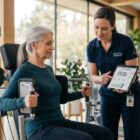
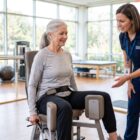
The best way to prevent a curve from worsening is to build an internal, “muscular brace.” When the deep spinal stabilizers (like the multifidus) are powerful, they act as a scaffold that holds the spine in its best possible position. In our Medical Gym , we don’t just train for size; we train for the specific endurance needed to keep your spine stable throughout a long workday.
Why General Gym Exercises Can Sometimes Make Scoliosis Worse
Generic exercises like heavy bilateral squats or deadlifts can be risky for scoliosis patients. Because the spine is already asymmetrical, the body will naturally “cheat” by using the stronger side to lift the weight, further entrenching the imbalance. This is why specialized physiotherapy and supervised training are critical—you need a specialist to ensure you aren’t accidentally strengthening your deformity.
The Strength Studio- Precision Loading for Asymmetrical Spines
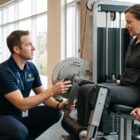
In the Strength Studio , we use MedX technology to provide “isolated” loading. Because the machine stabilizes your pelvis and lower body, we can target the spinal muscles with surgical precision. This allows us to focus on the weak side of the curve without the “cheating” movements that occur in a standard gym. This precision is what allows our patients to avoid the risks of major spinal fusion.
Specialized Physiotherapy- Restoring Mobility to the "Concave" Side
The “concave” (inside) of the curve is usually stiff and compressed. Our specialized physiotherapy team uses manual therapy and specific “breathing-based” stretches (similar to the Schroth method principles) to open up these tight segments. By restoring mobility to the stiff areas, we make it possible for the Medical Gym strengthening to be more effective.
Partnering with Orthocure for a Balanced and Resilient Spine
Scoliosis is a lifelong journey, but it doesn’t have to be a journey of decline. Our services at Orthocure Clinics and Strength Studios provide the tools you need to stay in control of your alignment. By combining medical diagnostics, structural correction, and clinical strength training, we help you manage your curve and live a life without limits. Partner with Orthocure today and discover the power of a balanced spine.
FAQs
Can I really stop my scoliosis from getting worse as an adult?
Yes. While bone structure is hard to change, the “muscular support” is highly adaptable. By building a strong “muscular brace” in the Strength Studio , you can provide the stability needed to prevent the discs from collapsing further into the curve, effectively stopping progression.
Is surgery the only option for a 40-degree curve?
Not necessarily. Many adults live pain-free lives with 40-degree curves if they have high levels of spinal strength. Surgery is usually only recommended if the curve is affecting lung function or causing severe, unmanageable nerve pain. Our Medical Gym approach is the first line of defense.
Why do I have more pain on one side of my back?
This is common in scoliosis. The muscles on the compressed (concave) side often become tight and ischemic (lack of blood flow), while the other side suffers from overstretch. Specialized physiotherapy balances these tissues, providing targeted back pain relief .
Can I do yoga if I have scoliosis?
Yoga can be helpful for mobility, but some poses (like deep twists) can actually aggravate a scoliotic curve if done incorrectly. We recommend a foundation of structural correction and strength first so that you have the stability to perform yoga safely.
How does MedX technology help scoliosis specifically?
MedX is unique because it allows us to test the strength of your spine in different parts of its rotation. We can identify exactly where the weakness is in your curve and then “isolate” that area for strengthening. This “surgical” approach to exercise is perfect for the asymmetrical needs of a scoliosis patient.