Synopsis
As we age, the spine undergoes natural changes, but distinguishing between normal wear and structural instability is vital for effective treatment. This guide explores the differences between spondylosis—general spinal degeneration—and spondylolisthesis, where a vertebra slips out of alignment. We detail how structural correction at Orthocure Clinics and Strength Studios addresses both conditions by stabilizing the spinal column. By utilizing a Medical Gym approach, patients can build the necessary muscular support to manage these age-related changes without surgery. We examine the role of specialized spinal physiotherapy in maintaining mobility and reducing nerve irritation. Understanding the mechanics of spinal wear is the first step toward long-term back pain prevention. Consistent application of these targeted protocols ensures the spine remains resilient and functional throughout the aging process.
Table of Contents
- Aging and the Spine- Normal Wear vs. Pathological Change
- Spondylosis- The Reality of Spinal Arthritis
- Spondylolisthesis- Understanding Structural Instability
- The Clinical Link- How Degeneration Leads to Slippage
- Structural Correction- Realigning the Aging Spine
- The Strength Studio Solution- Building the Muscular "Internal Splint"
- Medical Gym Protocols for Safe Aging
- Partnering with Orthocure for Lifelong Spinal Health
Aging and the Spine- Normal Wear vs. Pathological Change
Spinal aging is inevitable, but pain is not. Many individuals over 50 have signs of wear on their X-rays but remain active and pain-free. At Orthocure Clinics and Strength Studios, we help patients distinguish between “grey hair on the inside” (normal aging) and structural issues that require clinical intervention like structural correction.
Spondylosis- The Reality of Spinal Arthritis
Spondylosis is an umbrella term for age-related degeneration of the spinal discs and facet joints. As discs lose hydration, the space between vertebrae narrows, often leading to bone spurs. While this sounds daunting, specialized spinal physiotherapy focuses on maintaining joint nutrition and mobility to keep these changes from becoming symptomatic.
Spondylolisthesis- Understanding Structural Instability
Unlike general wear, spondylolisthesis occurs when one vertebra slips forward over the one below it. This slippage can be caused by a stress fracture (spondylolysis) or advanced degeneration. This condition creates significant instability and can pinch nerve roots, making targeted back pain prevention strategies and muscular stabilization essential.
The Clinical Link- How Degeneration Leads to Slippage
When spondylosis becomes severe, the facet joints that lock the vertebrae together wear down. Without these bony “brakes,” the spine is more likely to experience the slippage seen in spondylolisthesis. This is why early intervention in a Strength Studio is critical to stop the progression of wear before it becomes an instability issue.
Structural Correction- Realigning the Aging Spine
For both conditions, the goal is structural correction. We aim to restore as much neutral alignment as possible to reduce the shear forces on the spine. By addressing pelvic tilts and postural slumping, we take the mechanical “heat” off the degenerated segments, allowing for better movement and less pain.
The Strength Studio Solution- Building the Muscular "Internal Splint"
In a Strength Studio, we use medical-grade technology to build an “internal splint”. Since the bones and ligaments are weakened by age or slippage, the muscles must take over the job of stabilization. Strengthening the multifidus and deep core provides the structural support the spine can no longer provide on its own.
Medical Gym Protocols for Safe Aging
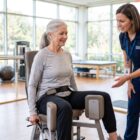
Training with spondylolisthesis requires extreme caution. Our Medical Gym protocols utilize MedX technology to provide high-intensity strengthening without high-impact movements. This allows seniors to build the muscle density needed for back pain prevention without risking further vertebral slippage or joint damage.
Partnering with Orthocure for Lifelong Spinal Health
You don’t have to accept a “bad back” as a consequence of getting older. Our services are designed to help you navigate the complexities of spinal wear with confidence. By combining structural correction with scientific strengthening, we help you stay mobile and independent. Partner with Orthocure today and invest in a spine that lasts a lifetime.
FAQs
Can exercise make spondylolisthesis worse?
If done incorrectly (like heavy traditional squats), yes. However, controlled strengthening in a Medical Gym is actually the best treatment. We focus on movements that stabilize the slip rather than aggravating it.
Is spondylosis the same as arthritis?
Essentially, yes. It refers to “osteoarthritis” of the spine. While it cannot be cured, it can be managed so effectively through structural correction that you remain pain-free.
Do I need surgery for a vertebral slip?
Most cases of spondylolisthesis are “Grade 1” or “Grade 2” and respond excellently to non-surgical spinal physiotherapy and strength training. Surgery is only necessary if the slip is progressing rapidly or causing severe nerve damage.
How does a Strength Studio help with back pain prevention?
By building the deep muscles around the spine, a Strength Studio provides the stability that prevents joints from grinding together. This is the most effective form of back pain prevention as we age.
How often should I train if I have spinal degeneration?
Consistency is more important than intensity. Two sessions a week in a Medical Gym setting are usually sufficient to maintain the muscular support needed to keep the spine stable and mobile.