Synopsis
The term “Degenerative Disc Disease” (DDD) is one of the most misunderstood labels in modern medicine. This guide aims to reframe DDD as a manageable biological process—essentially “grey hair of the spine”—rather than a permanent disability. We detail how structural correction at OrthoCure Clinics and Strength Studios addresses the mechanical changes associated with disc dehydration and height loss. By utilizing a Medical Gym approach, patients can build a “muscular corset” to compensate for the loss of disc cushioning. We examine how specialized spinal physiotherapy restores movement and reduces the chronic inflammation that often accompanies degeneration. Understanding that a “worn” disc can still be a functional, pain-free disc is the first step toward long-term recovery. Consistent application of our integrated protocols ensures that your spine remains resilient and powerful, regardless of the findings on your MRI.
Table of Contents
- The DDD Misnomer- Why "Disease" is the Wrong Word
- Understanding the Process- What Happens When a Disc Ages
- The Pain Disconnect- Why Worn Discs Don’t Always Hurt
- Structural Correction- Managing the Mechanics of a Thinner Disc
- Sarcopenia and the Spine- Why Muscle is Your Only Cushion
- Spinal Physiotherapy- Keeping the Segments Moving
- The Strength Studio- Reversing the Functional Decline
- Partnering with OrthoCure for a Stronger Second Act
The DDD Misnomer- Why "Disease" is the Wrong Word
At OrthoCure Clinics and Strength Studios, we spend a lot of time “de-frightening” patients. Degenerative Disc Disease isn’t actually a disease; it is a natural, age-related change. Just as our skin gets wrinkles, our spinal discs lose water content and elasticity over time. Labeling this a “disease” often creates unnecessary fear, leading to a “sentence” of inactivity that actually makes the condition worse.
Understanding the Process- What Happens When a Disc Ages
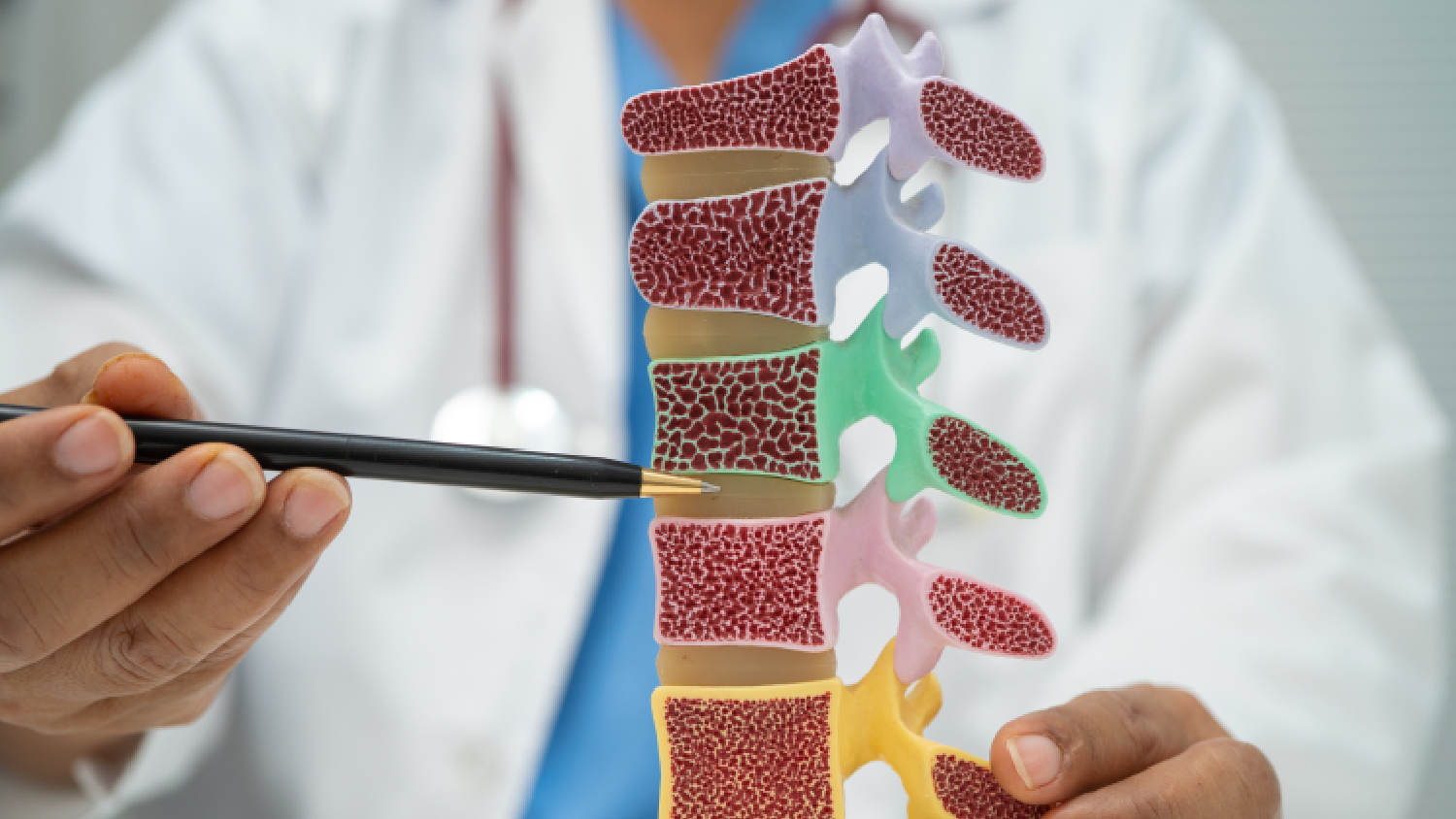
Discs are primarily composed of water. As we age, the disc’s ability to hold fluid decreases (desiccation). This leads to a loss of disc height, which brings the vertebrae closer together. This shift can put more pressure on the facet joints and narrow the space where nerves exit. However, this is a slow process that the body is remarkably good at adapting to if it stays strong.
The Pain Disconnect- Why Worn Discs Don’t Always Hurt
The most important thing to know about DDD is that imaging does not equal pain. Many people in their 40s and 50s have significant disc thinning but feel no pain at all. Pain usually occurs only when the thinning leads to secondary issues like joint inflammation or muscle spasms. Our Medical Gym protocols focus on these secondary drivers to eliminate pain while the disc continues its natural aging process.
Structural Correction- Managing the Mechanics of a Thinner Disc
When a disc loses height, the mechanics of the spine change. The “S-curve” of your back might flatten or increase, leading to instability. Structural correction involves realigning the spine to ensure that even with thinner discs, the weight is distributed as evenly as possible. By fixing your posture and pelvic alignment, we reduce the “grinding” forces that cause degenerative changes to become painful.
Sarcopenia and the Spine- Why Muscle is Your Only Cushion
If your discs (your primary shock absorbers) are wearing down, you need a backup system. That system is your musculature. Sarcopenia treatment—the prevention of age-related muscle loss—is critical for anyone with DDD. In our Strength Studio, we build the deep spinal muscles to take over the shock-absorbing duties that the discs can no longer handle alone.
Spinal Physiotherapy- Keeping the Segments Moving
Degeneration often leads to stiffness. When a disc thins, the joints can become “stuck,” leading to a loss of mobility. Specialized spinal physiotherapy uses manual therapy and targeted stretching to keep the spinal segments fluid. A moving spine is a healthy spine; movement helps circulate nutrients even into a degenerative disc, slowing down the rate of decay.
The Strength Studio- Reversing the Functional Decline
The real danger of a DDD diagnosis is “kinesiophobia”—the fear of movement. Patients stop being active, their muscles atrophy, and the spine loses even more support. The Strength Studio breaks this cycle. By using MedX technology, we safely load the spine, proving to you that your back is still capable of incredible work. We aren’t just treating a disc; we are rebuilding a human being.
Partnering with OrthoCure for a Stronger Second Act
Degenerative Disc Disease is a process of change, not a sentence of disability. Our services at OrthoCure Clinics and Strength Studios are designed to help you navigate these changes with confidence and power. By combining structural correction with medical-grade strengthening, we help you stay active and pain-free for decades to come. Partner with OrthoCure and move past the diagnosis toward a stronger future.
FAQs
Can Degenerative Disc Disease be reversed?
You cannot “regrow” a disc to its original height, but you can reverse the symptoms. Through structural correction and building a “muscular corset” in the Strength Studio , you can make your spine so strong that the disc thinning no longer causes pain or limitation.
Is running bad for me if I have DDD?
High-impact activities can be painful if your “natural brace” is weak. However, once you have built sufficient spinal stability in a Medical Gym , many patients return to running. The key is to build the muscular support system first to protect the aging discs.
Why does my MRI report sound so scary?
Radiology reports use clinical language like “desiccation” and “osteophytes” which sound like major illnesses. In reality, these are often just descriptions of normal aging. Spinal physiotherapy focuses on how you move, not just what the “picture” says.
How does a Strength Studio help with disc thinning?
As discs thin, the vertebrae become less stable. A Strength Studio targets the deep stabilizers—the multifidus—to “lock” the vertebrae in a healthy alignment. This provides the stability the disc can no longer provide, effectively acting as an internal shock absorber.
Will DDD eventually lead to surgery?
For the vast majority of people, no. Most cases of degenerative disc disease can be managed successfully for a lifetime through an integrated approach of alignment, movement, and medical-grade strength.