Synopsis
One of the most significant hurdles in modern orthopaedics is the “over-medicalization” of imaging findings. This guide addresses the common disconnect between what appears on an MRI—such as disc degeneration or bulging—and the actual physical symptoms a patient experiences. We detail why structural correction at Orthocure Clinics and Strength Studios focuses on functional movement rather than just “fixing the picture.” By utilizing a Medical Gym approach, we help patients understand that many imaging findings are the musculoskeletal equivalent of “grey hair”—normal signs of aging that don’t necessarily cause pain. We examine how specialized spinal physiotherapy treats the patient’s clinical presentation rather than just the radiology report. Understanding the limitations of imaging is the first step toward reducing “kinesiophobia” (fear of movement). Consistent application of our integrated protocols ensures that patients regain confidence in their bodies, regardless of what their MRI says.
Table of Contents
- The MRI Paradox- When the Picture Doesn't Tell the Whole Story
- "Normal" Abnormalities- The Prevalence of Findings in Pain-Free People
- Why We Treat the Patient, Not the Scan
- The Danger of "Voodoo Medicine"- How Imaging Can Increase Pain
- Structural Correction- Moving from Static Images to Dynamic Function
- The Strength Studio- Rebuilding Confidence in a "Damaged" Spine
- Integrated Diagnostics- The Role of Clinical Correlation
- Partnering with Orthocure for a Functional Future
The MRI Paradox- When the Picture Doesn't Tell the Whole Story
It is a frequent occurrence at Orthocure Clinics and Strength Studios: a patient arrives terrified because their MRI shows a “multi-level disc bulge,” yet their physical symptoms are minimal. Conversely, some patients in agonizing pain have nearly perfect scans. This is the MRI Paradox. An MRI is a static snapshot of anatomy; it does not show how your body moves, how your nerves process pain, or how strong your supporting muscles are.
"Normal" Abnormalities- The Prevalence of Findings in Pain-Free People
Extensive research has shown that if you take MRIs of 100 people over the age of 50 with zero back pain, at least 80% will show disc degeneration and 60% will show a bulge. These are often “normal” signs of aging, similar to wrinkles on the skin. At Orthocure, we help you distinguish between a clinically significant finding and a “wrinkle” that requires no medical intervention.
Why We Treat the Patient, Not the Scan
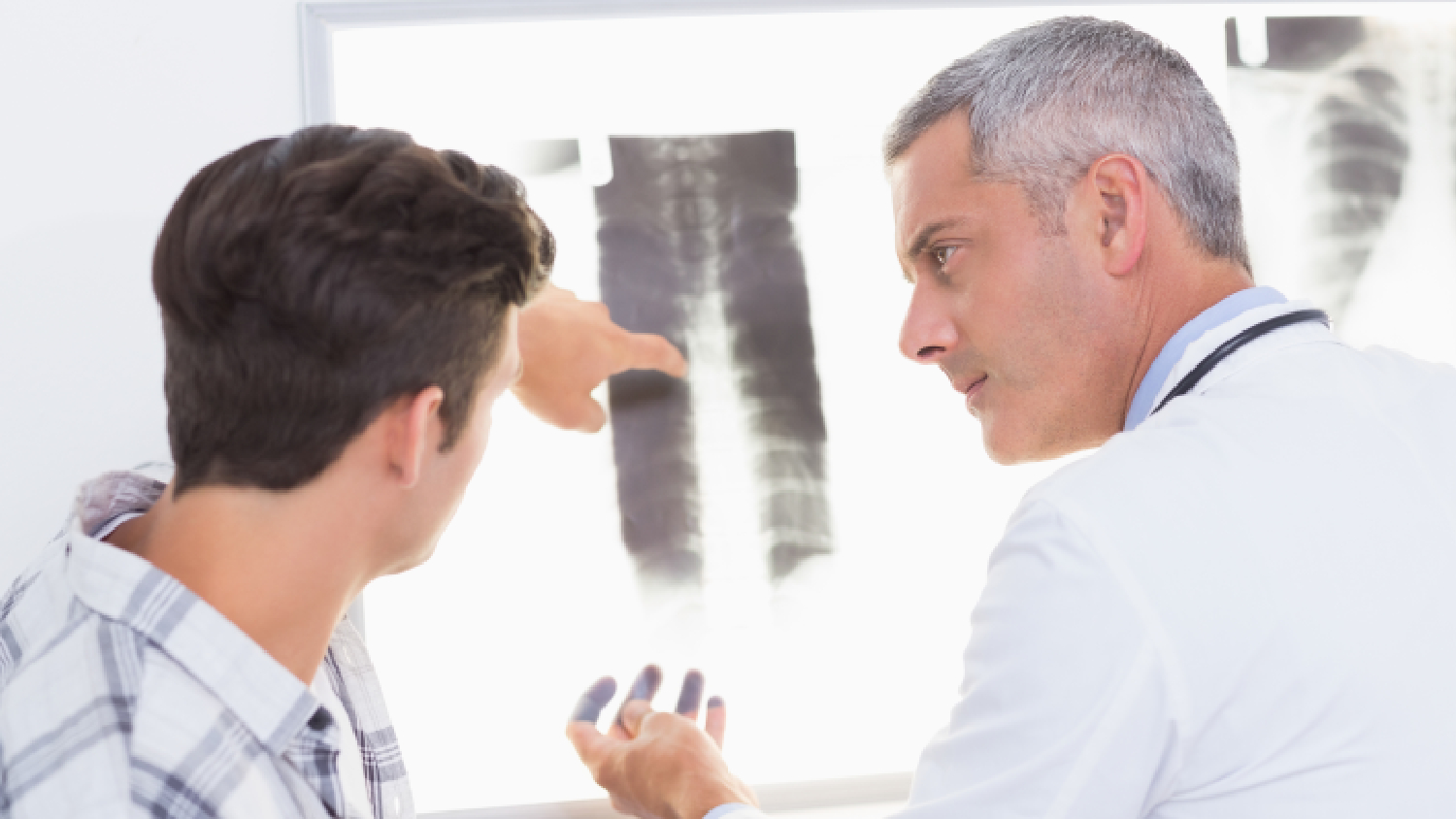
A radiology report might list several daunting terms, but our specialists focus on the clinical correlation. Does the location of the bulge match your specific nerve pain? Is your range of motion limited in a way that matches the scan? If not, the MRI finding may be an “incidentaloma”—something that looks scary but isn’t actually causing your problem. Our spinal physiotherapy is always tailored to your physical reality, not a black-and-white image.
The Danger of "Voodoo Medicine"- How Imaging Can Increase Pain
Studies show that patients who are told they have a “degenerative” spine often experience more pain and disability because they become afraid to move. This “Voodoo Medicine” effect can stall recovery. We use the Strength Studio to prove to your brain that your spine is actually resilient. By safely loading your muscles, we replace fear with the evidence of your own strength.
Structural Correction- Moving from Static Images to Dynamic Function
An MRI is taken while you are lying down, but you live your life standing and moving. Structural correction focuses on your “dynamic posture.” We look at how your pelvis tilts and how your spine curves under the force of gravity. Correcting these functional imbalances is far more important for long-term back pain relief than trying to “fix” a static bulge on a scan.
The Strength Studio- Rebuilding Confidence in a "Damaged" Spine
The most powerful “painkiller” is the realization that you are strong. In our Medical Gym , we use data-driven protocols to show you exactly how much weight your spine can safely handle. When a patient with a “bad MRI” realizes they can perform a 100lb lumbar extension without pain, the psychological and physical barrier to recovery is broken. This is the core of our Strength Studio philosophy.
Integrated Diagnostics- The Role of Clinical Correlation
ORTHOCURE CLINICS AND STRENGTH STUDIOS don’t ignore MRIs; we put them in context. Our integrated team—doctors, physiotherapists, and chiropractors—reviews your imaging alongside your functional tests. This ensures that if a scan does show a serious issue, we catch it, but if it shows normal wear and tear, we don’t let it distract us from your real path to recovery.
Partnering with Orthocure for a Functional Future
You are more than your radiology report. Our services are designed to help you look past the scan and focus on what really matters: your ability to move, play, and live without fear. By combining medical expertise with the science of the Strength Studio, we help you rebuild a body that is defined by its power, not its pictures. Partner with Orthocure today and start your journey toward functional freedom.
FAQs
If my MRI shows a bulge, does that mean I’m injured?
Not necessarily. Many people have “silent” bulges that cause no pain. An MRI shows anatomy, but spinal physiotherapy assesses function. If you have full range of motion and no nerve symptoms, that bulge might just be a normal sign of aging.
Why did my doctor say I have "degenerative disc disease"?
“Disease” is an unfortunate term for what is usually just natural disc aging. At our Medical Gym , we prefer to think of it as “disc ripening.” It means your discs have less water than they used to, but with structural correction , you can still have a perfectly strong and pain-free back.
Should I get an MRI before starting at the Strength Studio?
Not always. Unless you have “red flag” symptoms (like sudden weakness), we can often begin your back pain relief program based on a clinical exam. If we don’t see progress, we can then order an MRI to see if there is a specific mechanical blockage.
How can a Strength Studio help if my MRI looks bad?
A Strength Studio builds the muscles around the findings on your scan. Even if a disc is worn, strong muscles can act as a “natural brace” that takes the pressure off that disc, effectively making the “bad” MRI finding irrelevant to your daily comfort.
Can an MRI miss the cause of my pain?
Yes. MRIs often miss “functional” causes of pain, like a pelvic tilt or muscle imbalances. That’s why we focus on an integrated approach that looks at your whole body’s mechanics, not just the area where it hurts.