
Synopsis
An acute shoulder injury, particularly a rotator cuff tear, can be a life-altering event that severely limits your ability to lift, reach, or even sleep comfortably. This guide focuses on the critical need for precise rehabilitation following an acute tear to ensure the tendon heals correctly and strength is fully restored. We explore how specialized rotator cuff tear physiotherapy moves beyond simple pain relief to focus on the biological and mechanical restoration of the joint. Understanding the difference between a partial and full-thickness tear is essential for choosing the most effective non-surgical or post-operative path. We detail how targeted shoulder injury rehabilitation prevents chronic weakness and long-term joint degeneration. Finding a dedicated shoulder physio specialist ensures that your recovery is phased correctly to protect the healing tissue. Consistent application of these advanced protocols is the only way to return to an active, pain-free lifestyle. Expert management of acute shoulder injuries restores power and functional confidence. Utilizing evidence-based rotator cuff treatment protocols minimizes the risk of re-injury. Meticulous structural care is the cornerstone of enduring upper limb wellness.
Table of Contents
- The Impact of an Acute Rotator Cuff Tear
- Why Precise Rehabilitation is Non-Negotiable
- Phasing Your Recovery: From Protection to Power
- The Science of Tendon Healing and Controlled Loading
- Avoiding the Pitfalls of Compensatory Movements
- The Role of the Shoulder Physio in Restoring Mechanics
- The Orthocure Advantage: Protocol-Driven Tear Recovery
- Partnering with Orthocure for Complete Functional Restoration
The Impact of an Acute Rotator Cuff Tear
The rotator cuff is a group of four muscles and their tendons that act as the primary dynamic stabilizers of the shoulder. An acute rotator cuff tear typically occurs during a sudden fall, a heavy lift, or a high-velocity overhead movement. The result is immediate pain, a “snapping” sensation, and a profound weakness when trying to lift the arm. Because these tendons have a relatively poor blood supply, they do not heal effectively on their own. Without precise rehabilitation , a small tear can easily expand, leading to permanent loss of function and the early onset of shoulder arthritis.
Why Precise Rehabilitation is Non-Negotiable
Recovering from a tear is not about “working through the pain”; it is about a highly controlled biological process. Precise rehabilitation is essential because the healing tendon tissue is incredibly delicate in the first few months. If you load it too much, the tear worsens; if you move it too little, the joint freezes. Specialized shoulder injury rehabilitation finds the “sweet spot”—providing enough stimulus to encourage collagen alignment without overstressing the repair site. This meticulous balance is what determines whether you regain 100% of your strength or are left with a chronic disability.
Phasing Your Recovery: From Protection to Power
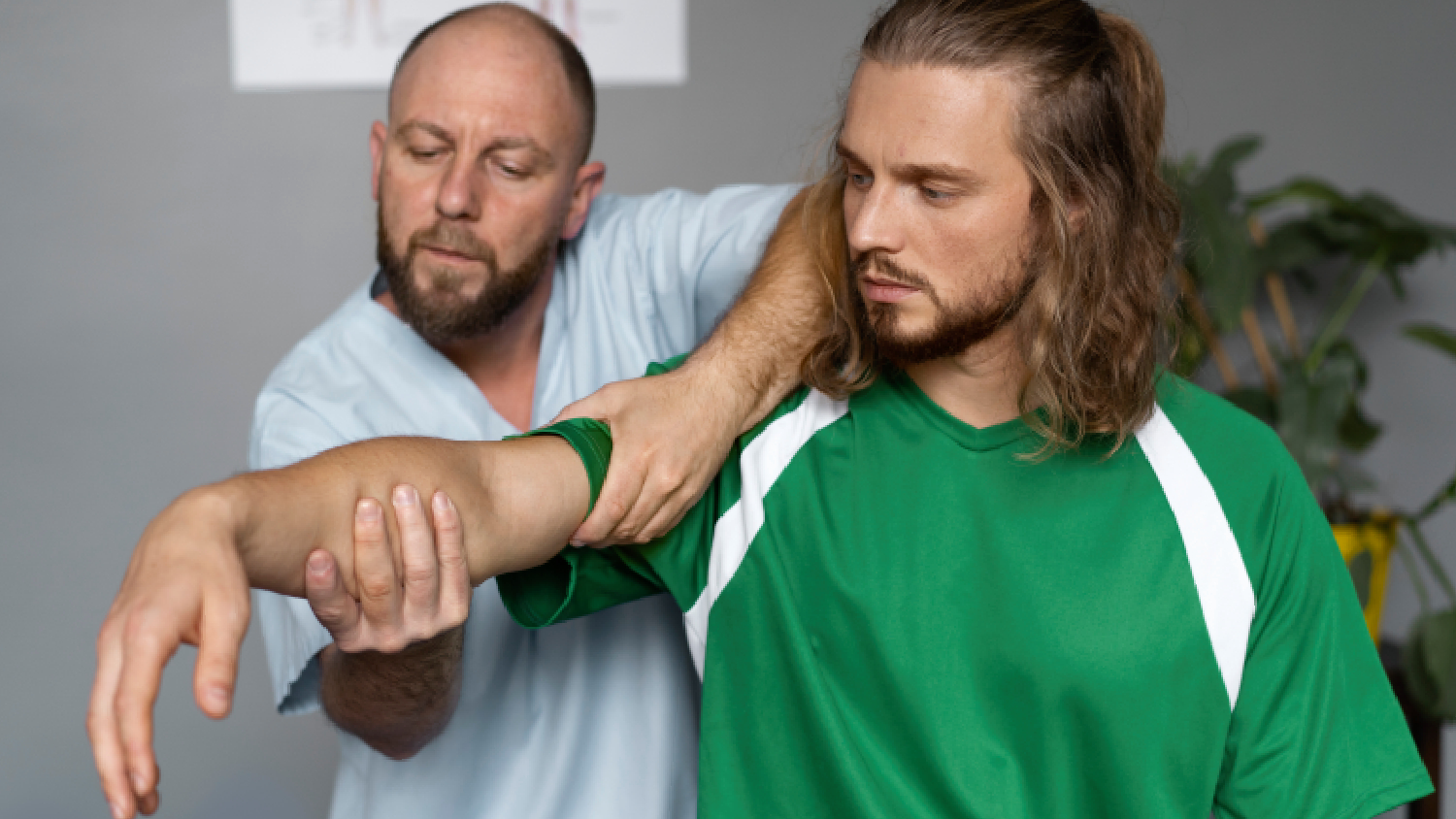
A successful rotator cuff treatment plan is strictly phased. Phase one focuses on protection and reducing inflammation, often using “passive” range-of-motion where the therapist moves the arm for you. Phase two introduces “active-assisted” movements as the tendon begins to knit together. Only in the final phases do we introduce resistance training. This phased approach, guided by a specialist shoulder physio , ensures that the structural integrity of the cuff is never compromised, allowing for a safe progression back to heavy lifting or sports.
The Science of Tendon Healing and Controlled Loading
Tendons respond to “mechanical loading.” When a tendon is torn, the new fibers are laid down in a disorganized fashion. Precise rehabilitation uses specific, low-impact exercises to apply tension in a very particular direction. This “mechanical signaling” tells the body to align the new collagen fibers along the line of force, making the healed tendon significantly stronger and more resilient. This is the scientific core of effective rotator cuff tear physiotherapy —it is literally engineering a stronger shoulder at the cellular level.
Avoiding the Pitfalls of Compensatory Movements
When the rotator cuff is torn, the body tries to compensate by using the upper trapezius (shrugging the shoulder) to lift the arm. This “hiking” motion is a major hurdle in shoulder injury rehabilitation because it leads to neck pain and further impingement in the shoulder. A key part of specialized therapy is neuro-muscular re-education—teaching the brain to use the correct muscles again. By suppressing these “cheat” movements, the therapist ensures that the mechanical forces are directed back through the rotator cuff, where they belong.
The Role of the Shoulder Physio in Restoring Mechanics
A dedicated shoulder physio acts as the architect of your recovery. They monitor the subtle mechanics of your “scapulo-humeral rhythm”—how your shoulder blade and arm bone move in sync. If this rhythm is off, even a healed tendon will eventually fail again. The specialist uses manual therapy to ensure the joint capsule is mobile and prescribes exercises to ensure the shoulder blade provides a rock-solid foundation for the arm. This focus on structural correction is what differentiates a clinical recovery from a temporary fix.
The Orthocure Advantage: Protocol-Driven Tear Recovery
ORTHOCURE CLINICS AND GYMS manages acute shoulder injuries through our unique 4 Point Protocol . We integrate advanced diagnostics with a multi-disciplinary team of Orthopaedic Doctors and Physiotherapists. For rotator cuff tears , we utilize specialized technology to monitor muscle activation and ensure the loading is precise. Our focus on Structural Correction means we look at the entire upper body—including the neck and thoracic spine—to ensure your shoulder isn’t just “fixed,” but is more resilient than it was before the injury.
Partnering with Orthocure for Complete Functional Restoration
The services offered by ORTHOCURE CLINICS AND GYMS provide a definitive pathway for recovering from a rotator cuff tear. We deliver expert rotator cuff tear physiotherapy and advanced protocols for shoulder injury rehabilitation . Our ultimate USP is our commitment to restoring your full power and range of motion through evidence-based, structural care. By partnering with us, you gain a dedicated team focused on helping you return to your active life, sports, and work with complete confidence in your shoulder’s strength.
FAQs
Can a rotator cuff tear heal without surgery?
Yes, many partial-thickness and even some full-thickness rotator cuff tears can be managed successfully without surgery through precise rehabilitation . The goal of non-surgical rotator cuff treatment is to strengthen the remaining healthy tendons and the surrounding shoulder muscles to compensate for the torn area. This restores functional strength and eliminates pain for many patients, especially those who are not high-demand overhead athletes.
Why does my neck hurt after a shoulder injury?
Neck pain is a very common side effect of acute shoulder injuries . When the rotator cuff is weak, the brain over-activates the neck and upper trapezius muscles to help lift the arm. This constant “shrugging” creates immense strain on the cervical spine. A core part of shoulder injury rehabilitation is correcting this faulty movement pattern and releasing the neck tension to ensure the entire upper body moves in harmony again.
How long does rotator cuff tear physiotherapy usually take?
Because tendons heal slowly, rotator cuff tear physiotherapy typically takes between 3 to 6 months for a full functional return. The first 6 weeks are focused on protection and mobility, while the subsequent months are dedicated to building strength and power. Consistency is key; skipping the late-stage strengthening is the most common reason why patients experience a relapse of pain after they start feeling better.
What happens if I ignore a small rotator cuff tear?
Ignoring a small rotator cuff tear is a significant risk. Because the rotator cuff is under constant tension, a small “nick” in the tendon can easily unzip and become a large, retracted tear. Furthermore, a torn cuff allows the arm bone to shift upward in the socket, leading to “Cuff Tear Arthropathy”—a severe form of arthritis that is much harder to treat. Early precise rehabilitation is the best way to prevent this progression.
How does Orthocure ensure the rehabilitation is "precise"?
Orthocure ensures precise rehabilitation by using standardized clinical protocols and advanced technology. We don’t guess your progress; we measure it. By assessing muscle firing patterns and using specialized equipment to isolate the rotator cuff muscles, we ensure the load is high enough to stimulate healing but low enough to remain safe. Our integrated team approach ensures that your Orthopaedic Doctor and Physiotherapist are on the exact same page regarding your healing timeline.