Synopsis
Osteoporosis is often called a “silent disease” because it progresses without symptoms until a bone actually breaks. This guide focuses on the specific risks of spinal bone density loss and the development of kyphosis, commonly known as a “Dowager’s Hump.” We detail how structural correction at Orthocure Clinics and Strength Studios addresses the postural collapse associated with vertebral weakening. By shifting toward a Medical Gym approach, patients can utilize mechanical loading to stimulate bone-building cells. We examine how specialized spinal physiotherapy helps maintain an upright posture and reduces the risk of compression fractures. Understanding that bone is a living, adaptable tissue is the first step toward reclaiming skeletal health. Consistent application of our osteoporosis prevention protocols ensures that your spine remains strong, straight, and resilient against the effects of aging.
Table of Contents
- The Silent Erosion- Understanding Spinal Osteoporosis
- The Dowager’s Hump- Why the Spine Curves with Age
- Compression Fractures- The Hidden Danger of Weak Vertebrae
- Wolff’s Law- Using Strength to Build Bone
- Structural Correction- Fighting the Forward Slump
- Spinal Physiotherapy- Protecting the Fragile Spine
- The Strength Studio- Safe, High-Level Loading for Bone Growth
- Partnering with Orthocure for a Stronger Skeleton
The Silent Erosion- Understanding Spinal Osteoporosis
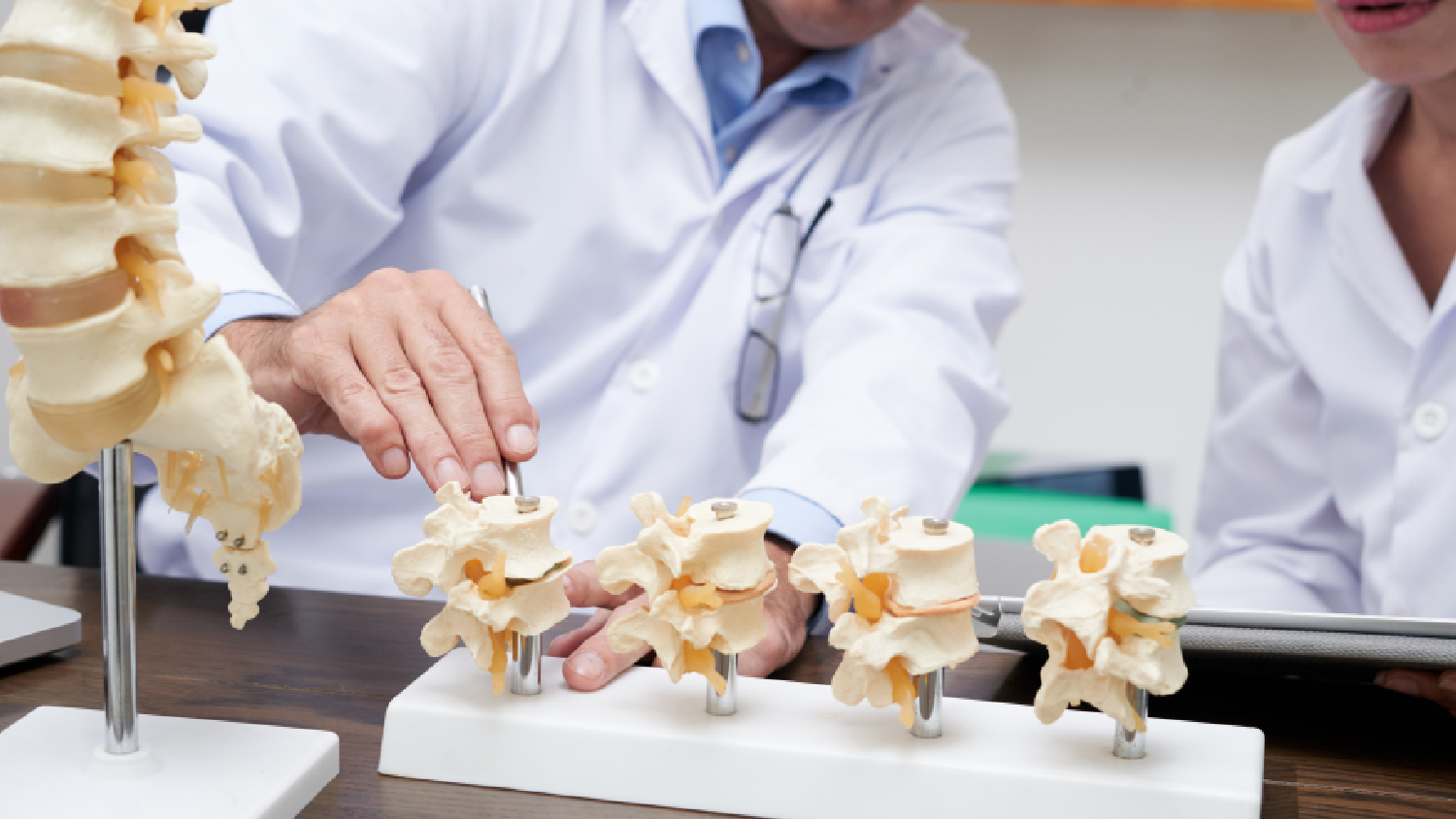
Osteoporosis occurs when the creation of new bone doesn’t keep up with the removal of old bone, making the vertebrae porous and brittle. At Orthocure Clinics and Strength Studios, we focus on the spine because it is one of the most common sites for osteoporotic fractures. Unlike a broken arm, a spinal fracture can happen during simple daily activities like sneezing or bending over.
The Dowager’s Hump- Why the Spine Curves with Age
A “Dowager’s Hump” (hyperkyphosis) is the visible outward curve of the upper back. While it can be postural, in older adults, it is often caused by wedge-shaped compression fractures in the front of the vertebrae. As the bone weakens, the front of the vertebra collapses, causing the spine to tilt forward. Structural correctio is vital here to prevent this curve from becoming permanent and affecting your breathing or balance.
Compression Fractures- The Hidden Danger of Weak Vertebrae
Many people with spinal osteoporosis have small “micro-fractures” that they mistake for general back pain. Over time, these fractures lead to a loss of height and the development of a stooped posture. Our integrated team uses specialized assessments to differentiate between muscular pain and potential bone density issues, ensuring you receive the correct osteoporosis prevention strategy.
Wolff’s Law- Using Strength to Build Bone
Bone is dynamic. According to Wolff’s Law, bone grows and strengthens in response to the loads placed upon it. This means that to fight osteoporosis, you must apply mechanical force to the skeleton. In our Strength Studio, we provide the specific type of resistance training required to trigger “osteoblasts”—the cells responsible for laying down new bone mineral.
Structural Correction- Fighting the Forward Slump
If your spine is already beginning to curve, structural correction focuses on stretching the tight chest muscles and strengthening the weak upper back muscles (extensors). By improving your alignment, we reduce the “shearing” force on the front of your vertebrae, significantly lowering the risk of a collapse. Keeping the spine “stacked” correctly is the best way to distribute weight safely across the bone.
Spinal Physiotherapy- Protecting the Fragile Spine
For patients with low bone density, traditional “high-impact” exercise can be dangerous. Specialized spinal physiotherapy at Orthocure emphasizes safe movement patterns. We teach you how to bend, lift, and twist without putting your vertebrae at risk. This “spine-sparing” education is critical for maintaining independence while you work on building strength in the Medical Gym
The Strength Studio- Safe, High-Level Loading for Bone Growth
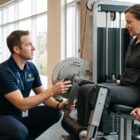
The challenge with osteoporosis is applying enough weight to build bone without causing a fracture. Our Strength Studio utilizes MedX technology, which allows for ultra-precise, low-impact loading. We can strengthen the spinal extensors with clinical accuracy, providing the “tug” on the bone necessary for growth while ensuring the movement is smooth and perfectly controlled.
Partnering with Orthocure for a Stronger Skeleton
Osteoporosis doesn’t have to lead to a “hump” or a loss of mobility. Our services at Orthocure Clinics and Strength Studios are designed to help you build a resilient skeleton through science and strength. By combining structural correction with medical-grade strengthening, we provide a proactive defense against bone loss. Partner with Orthocure today and take a stand for your spinal health.
FAQs
Can I really reverse bone loss with exercise?
While it is difficult to “undo” severe osteoporosis, targeted resistance training in a Strength Studio is proven to increase bone mineral density in those with osteopenia (early bone loss) and stop the progression of osteoporosis. It is the most effective natural way to strengthen your skeleton.
Is it too late to fix my "Dowager’s Hump"?
If the curve is due to muscle weakness and posture, structural correction can make a massive difference. If the curve is due to old fractures that have healed in a wedge shape, we focus on “functional correction”—strengthening the surrounding muscles to prevent the curve from getting worse.
Why is a Medical Gym safer for osteoporosis than a regular gym?
In a regular gym, it is easy to use jerky movements or lift weights in a way that compresses the spine. In our Medical Gym , we use specialized equipment that isolates the muscles and controls the range of motion, allowing for high-intensity training with zero impact on fragile bones.
What are the best exercises for osteoporosis prevention?
The best exercises are weight-bearing and resistance-based. In our Strength Studio, we focus on spinal extension, leg presses, and hip strengthening. These movements put the necessary mechanical stress on the most common fracture sites (spine and hips) to stimulate bone growth.
How does spinal physiotherapy prevent compression fractures?
Spinal physiotherapy teaches you “body mechanics.” By learning how to avoid deep forward bending (flexion) and sudden twisting, you protect your vertebrae from the specific forces that cause compression fractures, allowing you to live an active life safely.