Synopsis
Chronic muscle tightness and painful “knots”—clinically known as myofascial trigger points—can turn simple daily movements into a challenge. This guide deconstructs the science behind these localized areas of muscle spasm, offering an objective look at two of the most effective non-surgical interventions: dry needling and manual therapy. We detail how structural correction at Orthocure Clinics and Strength Studios ensures that these soft-tissue therapies are never applied blindly, but are instead used to resolve the specific mechanical imbalances causing the overload. By shifting toward a Medical Gym approach, patients learn to transition from passive knot release to active muscle preservation. We examine how specialized physiotherapy combines both modalities to restore healthy blood flow and reset the nervous system. Understanding how to systematically release and reinforce your musculature is the first step toward permanent back pain relief. Consistent application of our integrated protocols ensures your muscles remain supple, strong, and completely free of tension.
Table of Contents
- Inside the Muscle Knot- What Is a Myofascial Trigger Point
- Dry Needling- The Neurological Reset for Stubborn Spasms
- Manual Therapy- The Power of Tactile Mobilization and Tissue Gliding
- The Clinical Showdown- Comparing the Mechanisms of Healing
- Structural Correction- Why Knots Keep Coming Back in the Same Place
- Specialized Physiotherapy- Crafting a Hybrid Soft-Tissue Strategy
- The Strength Studio- Solidifying the Release Through Targeted Loading
- Partnering with Orthocure to Unlock Your Body's True Mobility
Inside the Muscle Knot- What Is a Myofascial Trigger Point
A muscle knot is not an actual knot in the tissue; it is a microscopic localized spasm within a muscle fiber. When a muscle is overworked, poorly aligned, or subjected to chronic stress, individual sarcomeres contract continuously, cutting off their own local blood supply. This lack of oxygen and nutrients creates an acidic environment that irritates nearby nerve endings, causing a dull ache that can often radiate to other areas. At Orthocure Clinics and Strength Studios, we map these trigger points to find the mechanical root cause of your discomfort.
Dry Needling- The Neurological Reset for Stubborn Spasms
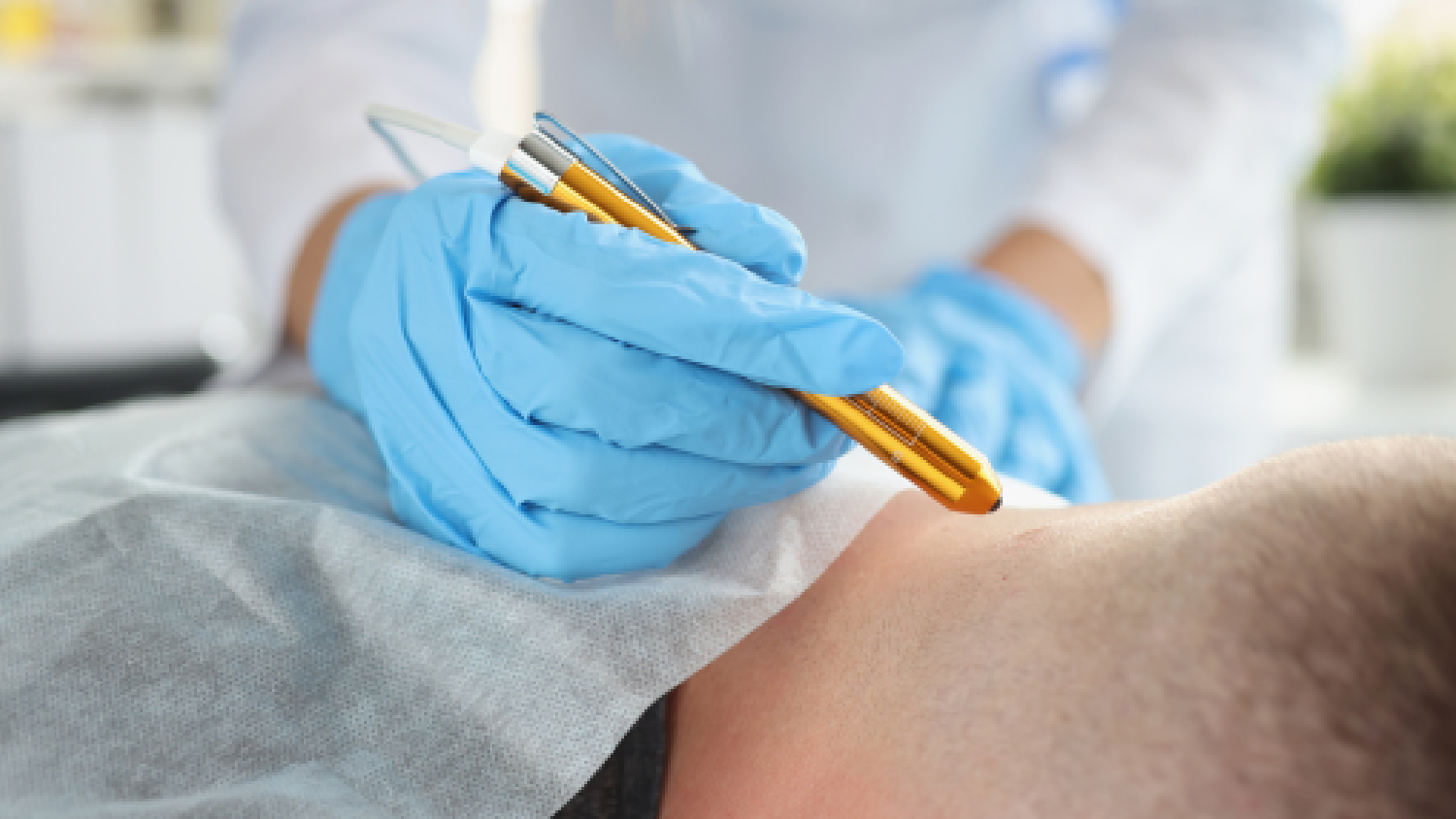
Dry needling is a modern, evidence-based intervention that targets deep, stubborn trigger points using fine, sterile acupuncture-type needles. Unlike injections, no medication is delivered. The needle is inserted directly into the Center of the knot, eliciting a “local twitch response.” This rapid contraction and relaxation mechanically disrupts the dysfunctional muscle fibers, flushes out accumulated chemical waste, and signals the central nervous system to reset the muscle’s resting tone. It is a highly efficient shortcut to back pain relief for deep tissue structures.
Manual Therapy- The Power of Tactile Mobilization and Tissue Gliding
Manual therapy encompasses a wide range of hands-on techniques, including ischemic compression, myofascial release, and instrument-assisted soft tissue mobilization. Our physiotherapists use their hands to feel the texture, restriction, and glide of the fascia and muscle layers. By applying directed pressure and stretching, manual therapy physically elongates shortened tissues, breaks down superficial adhesions, and dramatically increases localized circulation. It is an indispensable tool for restoring broad functional mobility.
The Clinical Showdown- Comparing the Mechanisms of Healing
To help you choose the right approach, it helps to see how these techniques compare side by side:
| Feature | Dry Needling | Manual Therapy |
|---|---|---|
| Depth of Reach | Deep; easily penetrates thick muscle layers (e.g., glutes, deep neck). | Superficial to moderate; limited by hand pressure and tissue thickness. |
| Primary Sensation | A deep, brief ache or muscle twitch. | Direct pressure, stretching, and variable localized tenderness. |
| Neurological Impact | Direct, rapid reset of the motor endplate. | Broad down-regulation of the nervous system and stress reduction. |
| Best Used For | Chronic, focal “stuck” knots that resist standard massage. | Diffuse muscle guarding, joint stiffness, and fascial restrictions. |
Structural Correction- Why Knots Keep Coming Back in the Same Place
If you get a muscle knot massaged or needled, and it returns a few days later, the issue is not the muscle—it is your framework. An unlevel pelvis, a rounded thoracic spine, or a forward head shift forces certain muscles to work overtime just to keep you upright. Structural correction realigns your skeleton, resolving the mechanical “overload” that causes trigger points to form in the first place. Treating soft tissue without structural correction is a temporary fix.
Specialized Physiotherapy- Crafting a Hybrid Soft-Tissue Strategy
At Orthocure, our specialized physiotherapy protocols do not rely on just one tool. We recognize that optimal recovery often requires a hybrid approach. A typical session might begin with dry needling to instantly deactivate a deep, painful muscle knot, followed by manual therapy to gently mobilize the surrounding tissue and joints. This combined strategy ensures that your nervous system is calm and your joints are prepared for the next phase of care.
The Strength Studio- Solidifying the Release Through Targeted Loading
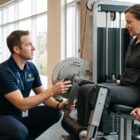
Releasing a knot creates a temporary “blank slate” for the muscle. To prevent it from tightening back up, you must immediately introduce controlled mechanical loading. In our Strength Studio , which features advanced equipment within a pristine Medical Gym environment, we strengthen the opposing and stabilizing muscle groups. By teaching the muscle how to contract cleanly throughout its entire range of motion, we build a robust system that resists fatigue and knot formation.
Partnering with Orthocure to Unlock Your Body's True Mobility
You do not have to live with the constant, draining ache of chronic muscle knots. Our comprehensive services at Orthocure Clinics and Strength Studios are designed to break the cycle of tension for good. By combining the precision of dry needling and manual therapy with systemic structural correction and medical-grade strengthening, we restore fluid, comfortable movement to your daily life. Partner with Orthocure today and experience the relief of a fully liberated body.
FAQs
Is dry needling the same thing as acupuncture?
No, they are fundamentally different. Acupuncture is based on traditional Chinese medicine and aims to balance energy flow along meridians. Dry needling is based on modern western anatomy and neurophysiology; the needles are placed directly into anatomically mapped muscle knots to physically disrupt a localized spasm and reset muscle tissue.
Does dry needling hurt?
Most patients feel a slight prick upon insertion, followed by a unique, deep dull ache when the muscle twitches. This twitch response can be surprising, but it lasts only a fraction of a second and is a positive indicator that the spasm is releasing. Our specialized physiotherapy team is highly trained to make the process as comfortable as possible.
Why do my shoulder blades always have knots?
The muscles between your shoulder blades (like the rhomboids and middle trapezius) are highly susceptible to postural strain. When you slouch forward at a computer or look down at a phone, these muscles are pulled tight and forced to hold the heavy weight of your head all day. Lasting relief requires structural correction to shift your head back into alignment.
Can I go straight to the Strength Studio after having dry needling done?
Yes, under professional guidance. While your muscle might feel a bit tender or heavy—similar to the feeling after a hard workout—light to moderate exercise in our Medical Gym helps pump fresh blood through the area, reducing post-needle soreness and reinforcing the newly gained range of motion.
How many treatment sessions will it take to get rid of my knots completely?
Acute knots can often be deactivated in 1 to 3 sessions of combined dry needling and manual therapy. However, if the knots are the result of chronic poor posture or spinal misalignment, a complete 8 to 12-week protocol involving structural correction and core development is necessary to keep them from returning.